
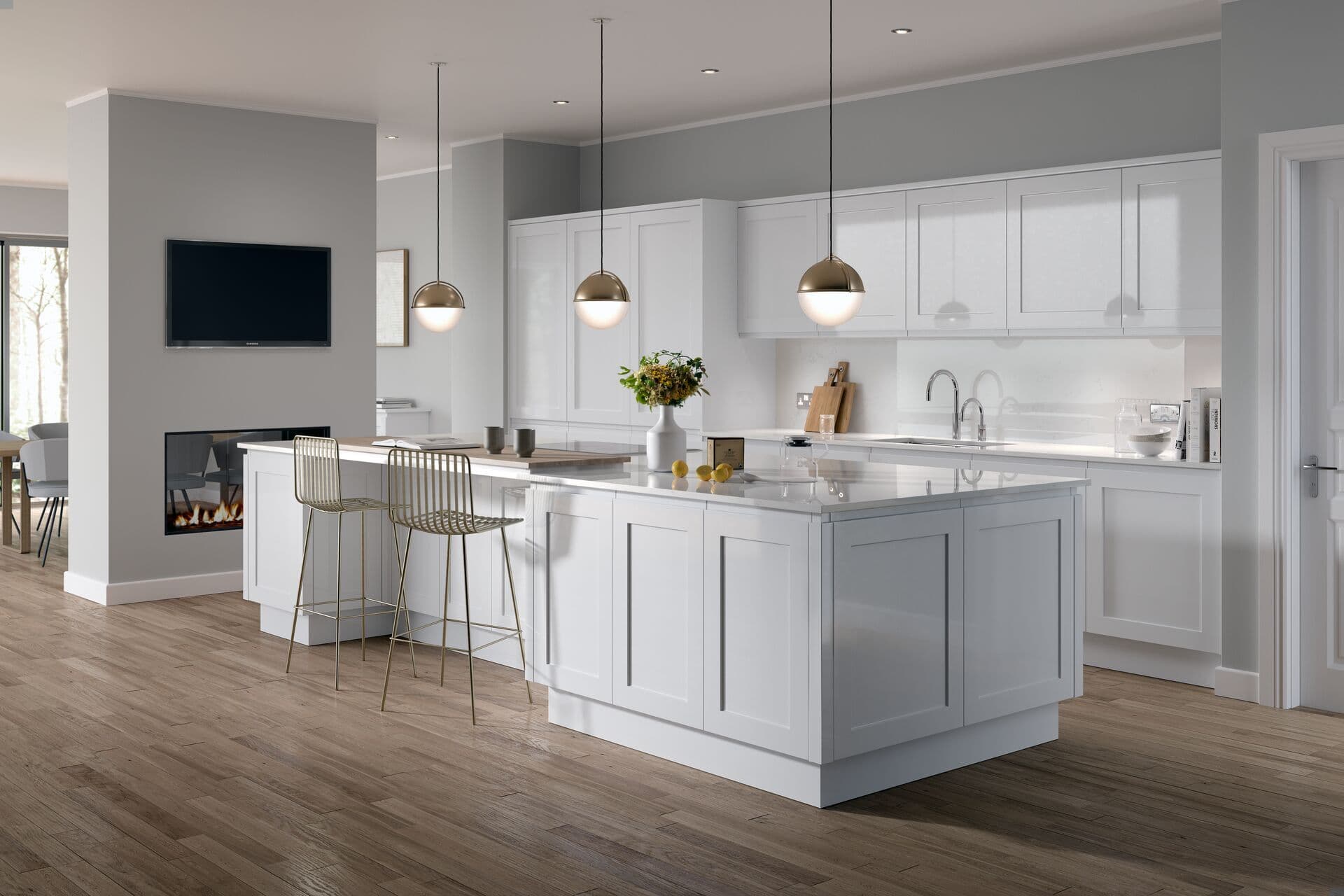
Comparing Laminate, Quartz and Granite Kitchen Worktops
Honest maintenance demands and how each material actually holds up in a working family kitchen, not just in the showroom.
Worktops get chosen last in most kitchen designs and thought about least, right up until the point someone puts a hot pan down without a trivet or a red wine glass tips over and sits there overnight. Then the material choice suddenly matters a great deal. Here's what we actually tell customers in the Mexborough showroom when they're deciding between laminate, quartz and granite.
Laminate: the honest budget option
Modern laminate worktops have moved on considerably from the thin, curling surfaces people remember from decades ago. Today's laminates use a postformed or square edge, sit on a moisture-resistant core, and come in finishes that convincingly mimic stone, wood and concrete from arm's length. For a lot of kitchens, particularly rentals or homes being renovated to sell rather than to keep forever, laminate does the job at a fraction of the cost.
The limitation is heat and moisture at the edges and around the sink cutout. A pan taken straight from the hob can scorch the surface permanently. Standing water at a poorly sealed joint will eventually swell the chipboard core. It's not a material that forgives carelessness, but for a kitchen that gets normal, careful daily use, it's a perfectly sensible choice.
Quartz: the middle ground most people land on
Quartz worktops are engineered stone, typically around 90 to 93 percent crushed natural quartz bound with resin. That engineering is what makes them so consistent. Unlike granite, which is a natural product with genuine variation, quartz slabs from the same batch look near-identical, which matters if you're matching an upstand, a window sill and a worktop across a long run.
Try it on your own room
Curious how this would look in your house?
Send us a photo and we’ll email you a concept of your own room in this style. Free, no account needed.
Concept visual: your designer creates the accurate version.
Quartz is non-porous, so it doesn't need sealing and resists staining from wine, oil and food acids far better than granite or laminate. It's not indestructible though. Sustained direct heat from a pan can cause thermal shock and crack the resin binder, which is the most common quartz call-back we see. A trivet is not optional, whatever the sample brochure implies.
Granite: natural stone with genuine character
Granite is quarried, not engineered, and every slab is genuinely one of a kind. If you want a worktop that looks like nobody else's, granite delivers that in a way quartz's manufactured consistency can't. It handles heat better than quartz, tolerating a hot pan directly on the surface without the cracking risk, which matters to households that cook a lot.
The trade-off is porosity. Granite needs sealing on installation and resealing periodically, usually every twelve to eighteen months depending on the specific stone and how it's used. Skip resealing and it will eventually stain from oil, wine or citrus left sitting too long. It's also worth seeing the actual slab your worktop will be cut from before committing, since photographs rarely capture the real variation in pattern and colour.
Granite rewards the household that reseals it on schedule. Quartz rewards the household that never remembers to.
Matching the material to how you actually cook
A household that cooks daily, uses pans straight from a hot hob, and doesn't always reach for a trivet is better served by granite or a well-fitted laminate than by quartz. A household that entertains, spills wine, and wants a surface that looks the same in five years with minimal upkeep is better served by quartz. There isn't a wrong answer here, only a mismatch between the material and how the kitchen actually gets used.
Seeing the real thing before you choose
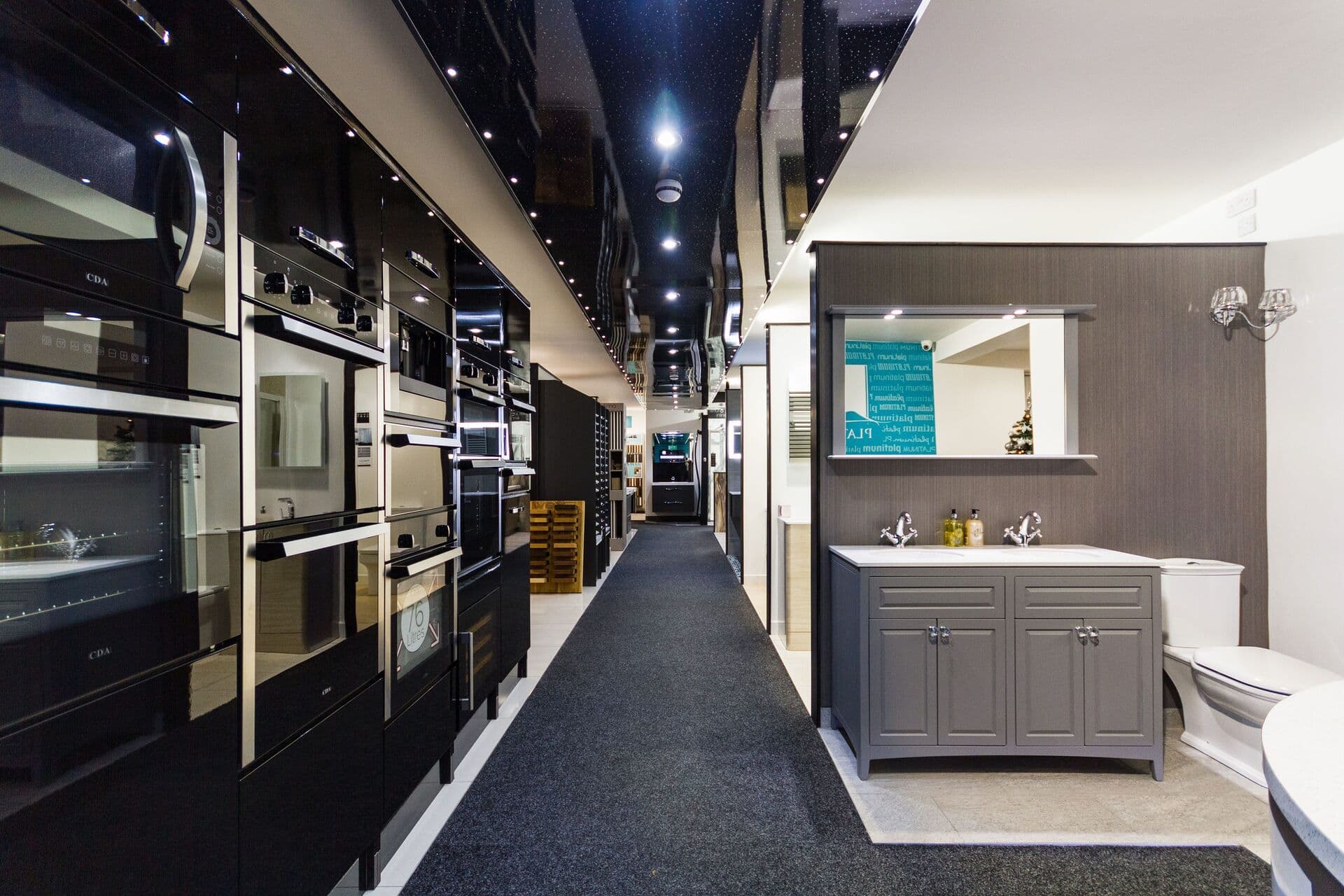
Samples in a brochure and a full worktop under showroom lighting tell very different stories, particularly with granite where slab-to-slab variation is the whole point. The Mexborough showroom has all three materials fitted in full kitchen displays so you can run a hand across each, check the edge profiles, and see how they actually catch the light. The free home design survey can talk through which fits your budget and your kitchen habits before you commit either way.
More From the Blog

Find Out What's Possible: It's Completely Free
Everything starts with a visit to your home. We take precise measurements, discuss your ideas, and then create a full CAD design at our showroom: all completely free.
What's Included
- Professional room measurements
- Full CAD design at our showroom
- Detailed, itemised quotation
- Amend designs until you're 100% happy
- No pressure, no obligation
Start Here
See what we can do for your home
Choose Your Service
Kitchen, bathroom, bedroom, or multiple rooms.
Pick a Date & Time
Select from available slots that suit your schedule.
We Come to You
Our designer visits your home. Completely free, no obligation.
or call 01709 5888 22
New posts, real project photos and the odd offer, sent only when we have something worth reading.